
The complete guide
Choosing Heavy Duty Gate Hinges for Your Gate
A heavy gate needs more than a strong hinge
A gate that drags or takes a hard push to open can make a simple trip outside frustrating. It can also be a sign that something needs attention. Worn hinges are one possible cause, but loose fixings, a leaning post or a twisted frame can create similar problems.
Before replacing the hardware, look at the whole gate. Does the post move when the gate swings? Are the fixing holes damaged? Does the latch line up when the gate is supported? These checks help you avoid fitting new hinges to a problem they cannot solve.
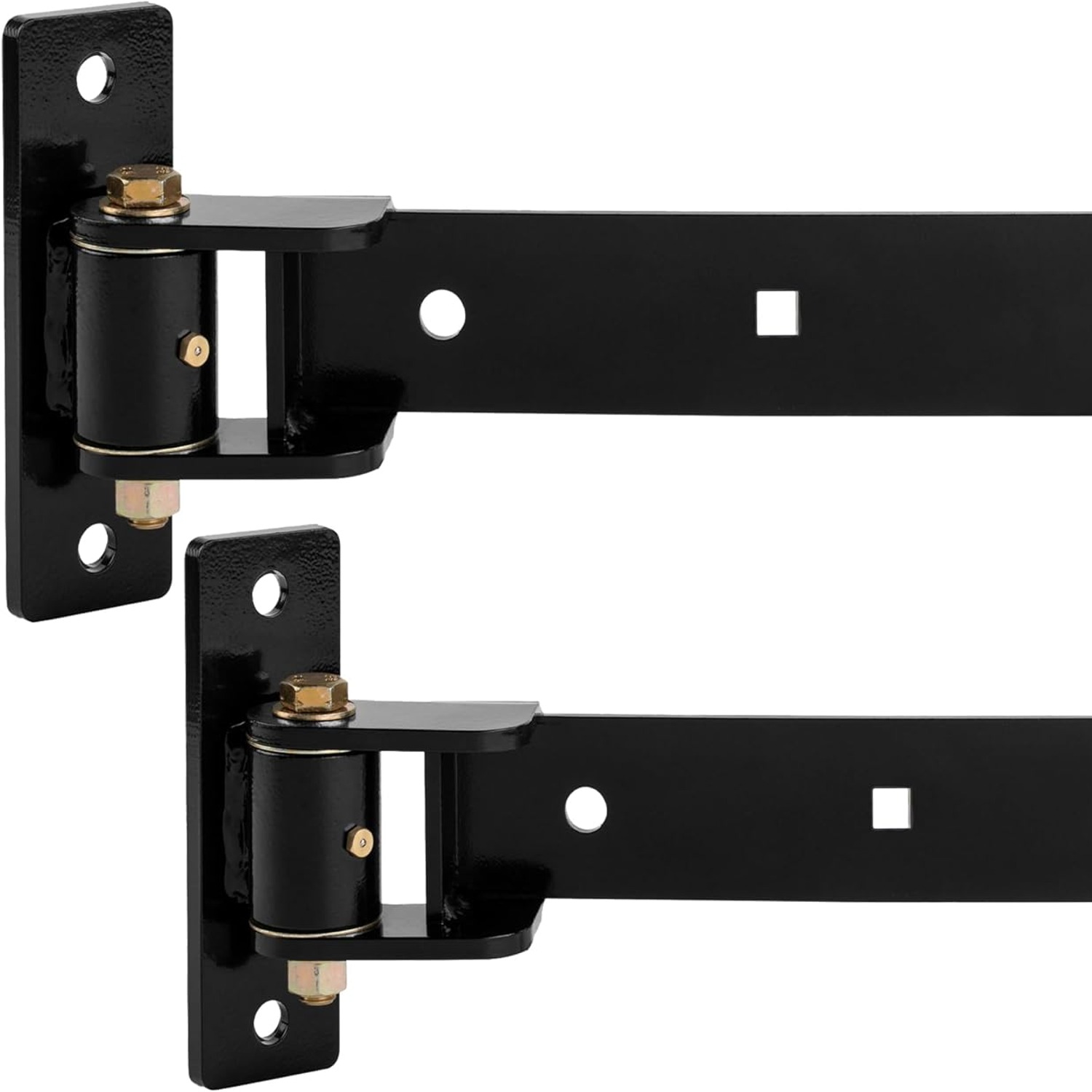
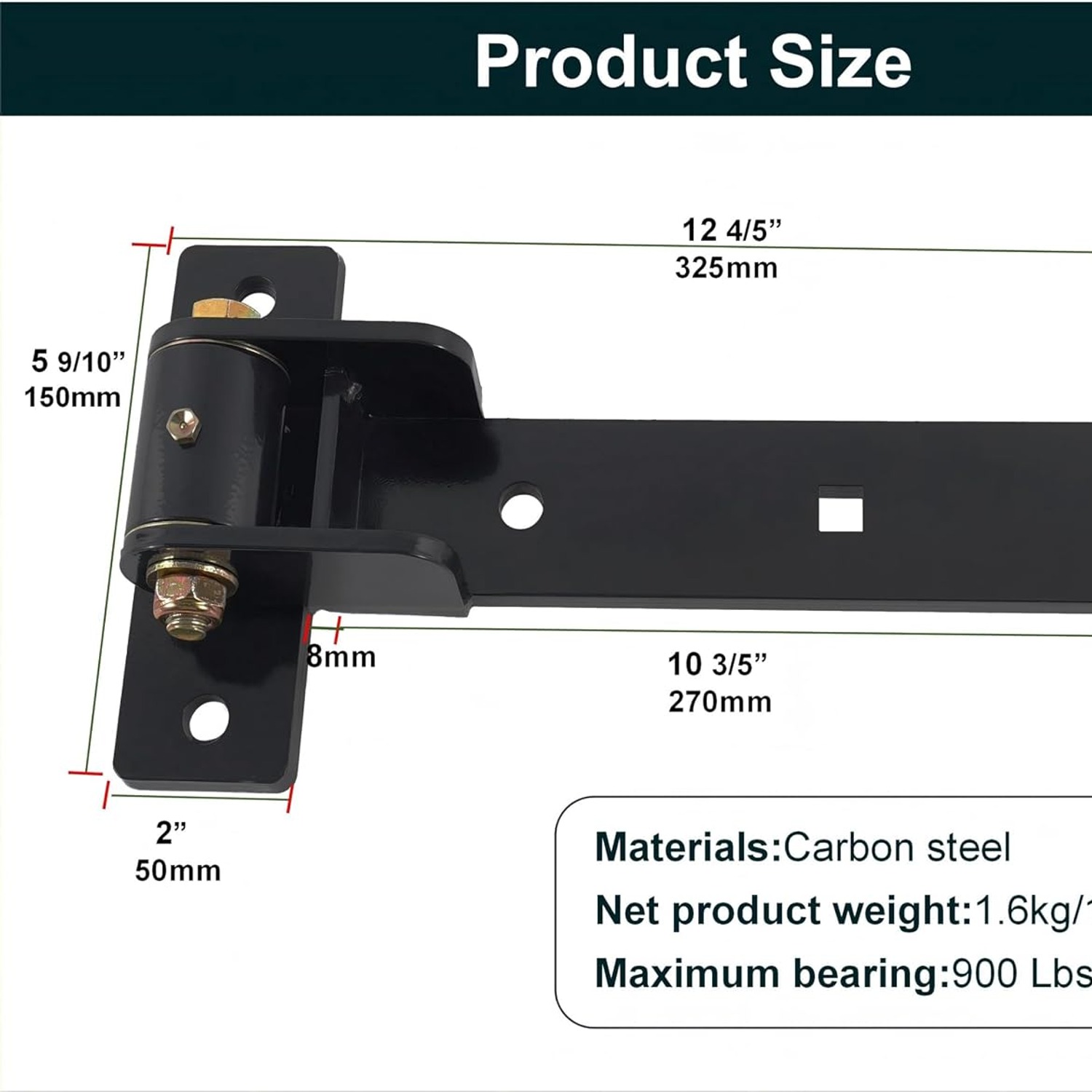
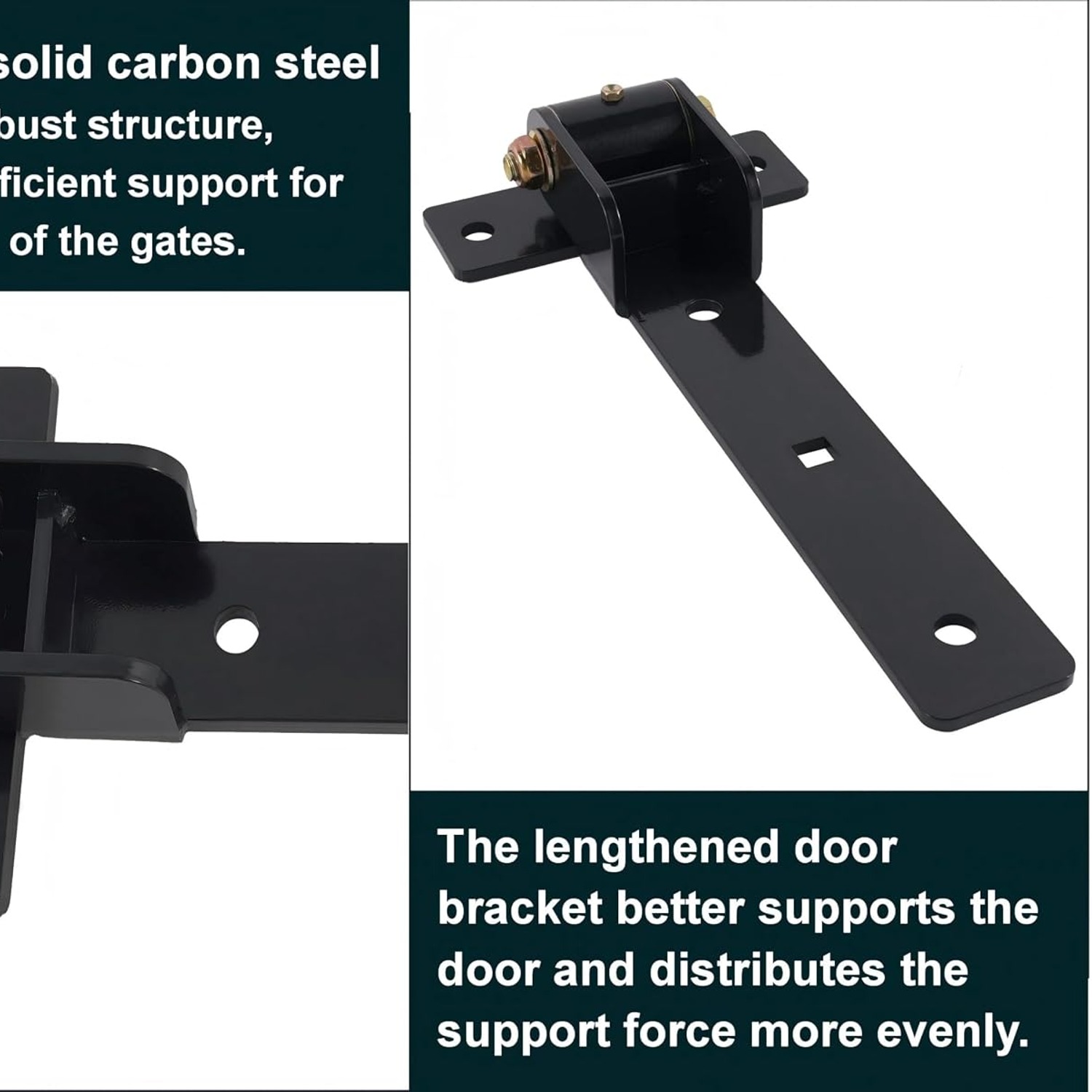
The HFCENXIE EXG180 heavy duty gate hinges offer carbon steel construction, built-in ball bearings and a listed maximum weight capacity of 900 pounds. Those facts make them worth assessing for a substantial gate. They do not remove the need to check the frame, post and installation method.
What the listed size tells you
These hinges are described as a nominal 13 inch design. The product details give a length and width of 32.5 x 15 cm. Use those listed measurements to begin checking the available space on your gate and post.
Overall size is only part of the fit. A replacement hinge must also place the pivot where the gate can swing freely. The mounting holes need sound material behind them, and the strap must sit properly against the chosen surface.
If you are replacing existing hardware, do not assume that similar-looking hinges share a hole pattern. This record lists 10 holes but does not provide their spacing. Ask for further measurements if matching old holes is important.
Leave room for the hinge movement as well as the visible plate. Nearby trim, fence rails and post caps can affect the finished installation.
How ball bearing gate hinges work
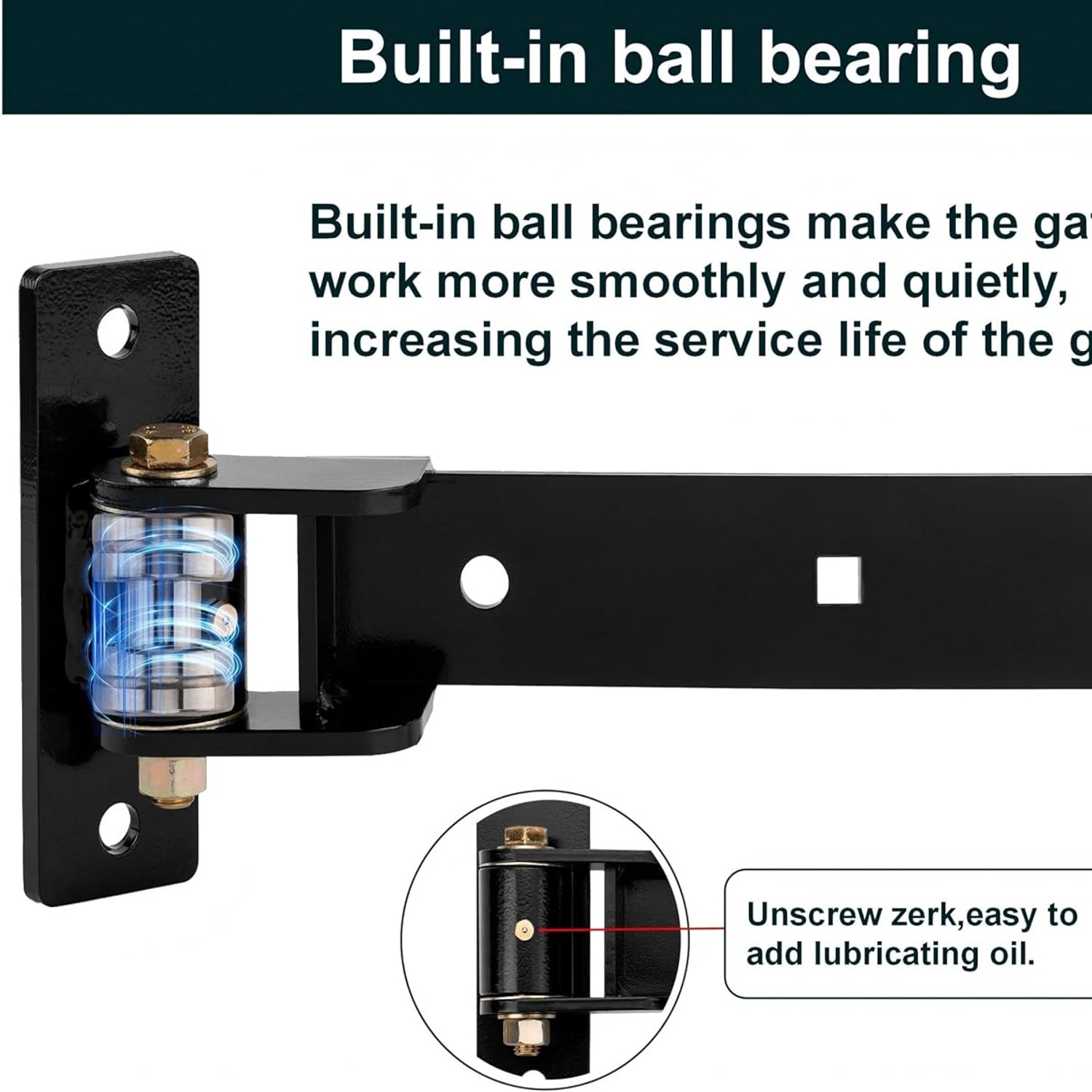
A hinge carries the gate while allowing it to turn around a pivot. Friction at that moving point can make a gate harder to open. Built-in ball bearings are intended to reduce that friction and support smoother movement.
That is useful for a gate you open often, whether it leads to a garden, a work area or a paddock. Still, bearings cannot correct poor alignment. Hinges set on different pivot lines can bind even when the parts themselves are sound.
Smooth operation starts with careful fitting. The gate needs proper support during installation, and the mounting positions need to agree with one another. Once fitted, the gate should move through its intended arc without being forced.
Do not read ball bearings as a promise of silent operation forever. Dirt, wear and loose fixings can affect any moving gate hardware. Regular checks remain worthwhile.
Understanding the 900-pound capacity
The stated maximum weight capacity is 900 pounds. Treat this as a figure to verify against your project, not as the only buying test.
The maker does not say clearly whether the capacity applies to one hinge or the complete supplied set. It also does not give test conditions, gate width limits or a recommended hinge spacing. Confirm those points before using the hardware near its listed capacity.
Gate width matters because weight acts at a distance from the post. A wide gate can place different demands on its mounting points than a narrower gate of similar weight. Wind exposure and frequent use also deserve attention when an installer assesses the setup.
Never use extra help lifting a gate as a reason to exceed a hardware limit. Safe handling and safe working capacity are separate issues. If the load is uncertain, get advice before buying.
Choosing between bolt-on and weld-on fitting
The listing describes both bolt-on and weld-on installation. These options give you different ways to attach the hinges, but the correct choice depends on the gate and supporting structure.
For bolt-on fitting, M12 bolts are specified and are not included. Bolt length, grade, washers and other fixing details are not supplied in the maker's listing. Select them for the actual gate and post rather than guessing from the hinge size.
Wooden gate hinges need sound timber behind their fixings. Soft, split or decayed wood should be addressed before installation. Tightening a new bolt into damaged material does not create a reliable mounting point.
Weld-on gate hinges require a suitable metal structure and skilled fitting. A qualified installer should assess the materials and protect nearby parts during the work. Ask how any affected coating will be dealt with afterwards.
Plan the opening direction before drilling
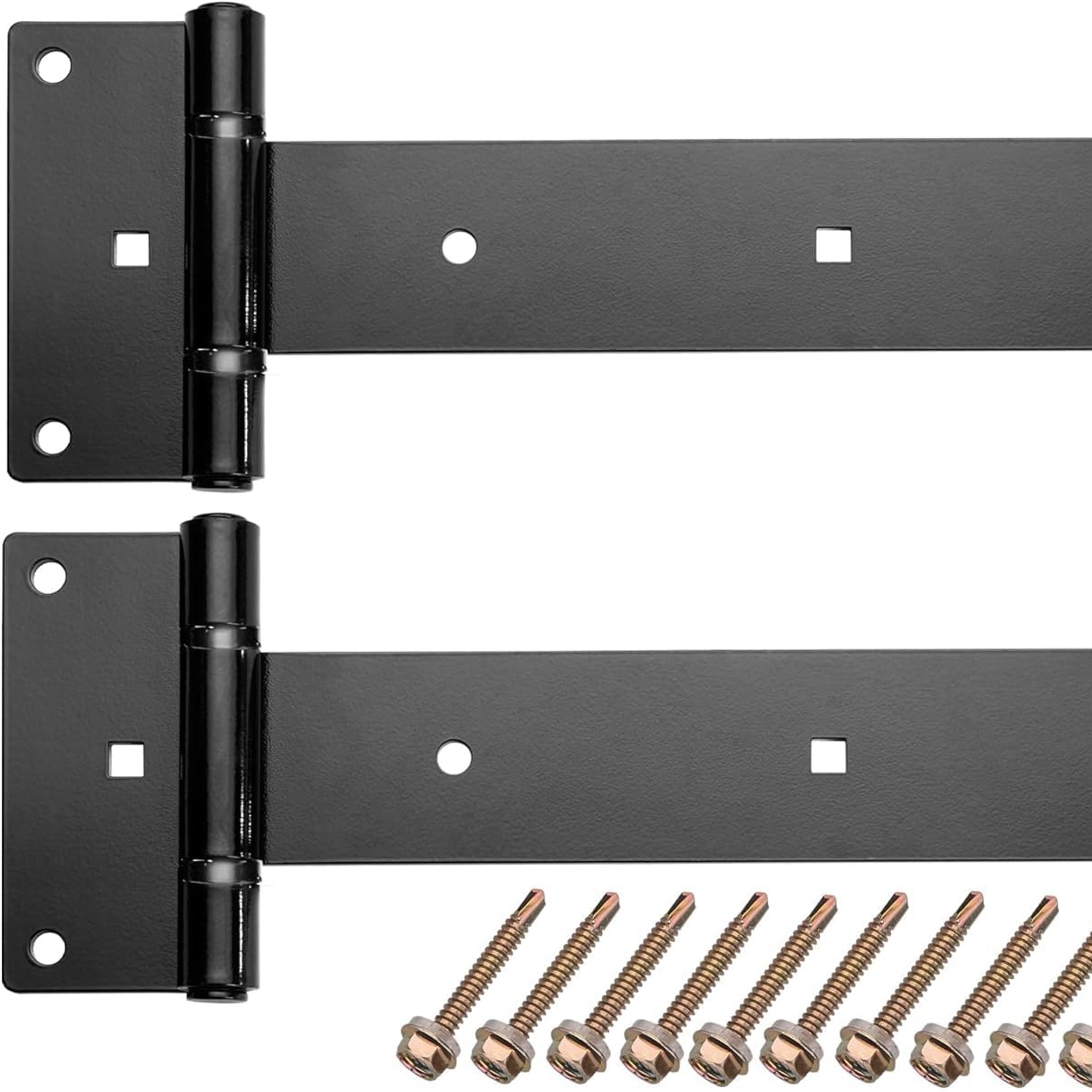
The listed face-mount arrangement allows a 180-degree one-way opening. The side-mount arrangement is described as allowing a 90-degree inward opening.
These figures describe the hinge configurations, not a guarantee that your gate will reach those angles. A wall, rising ground or a nearby fence can stop the swing earlier. Handles and latches also need clearance.
Walk through how you use the opening. Think about carrying garden tools, moving equipment or passing through with a wheelbarrow. The gate should open in a useful direction without blocking another path.
Mark the proposed pivot location and check the full swing before making permanent holes. Small changes at the hinge can have a noticeable effect at the far end of a wide gate.
What “adjustable” means for your choice
The supplied product heading includes adjustable gate hinges. However, the maker does not describe an adjustment mechanism or give an adjustment range.
That means you should not assume you can raise the gate, change its offset or alter its tension after fitting. If your project needs one of those features, ask for confirmation before ordering.
This matters when replacing hinges on a gate that has dropped over time. Adjustment can be useful, but it should not be a substitute for repairing a loose post or weak frame. Start with a stable structure, then choose hardware with the confirmed features you need.
For this product, the documented fitting choices are the mounting arrangements and bolt-on or weld-on attachment options.
Which gate projects may suit these hinges?
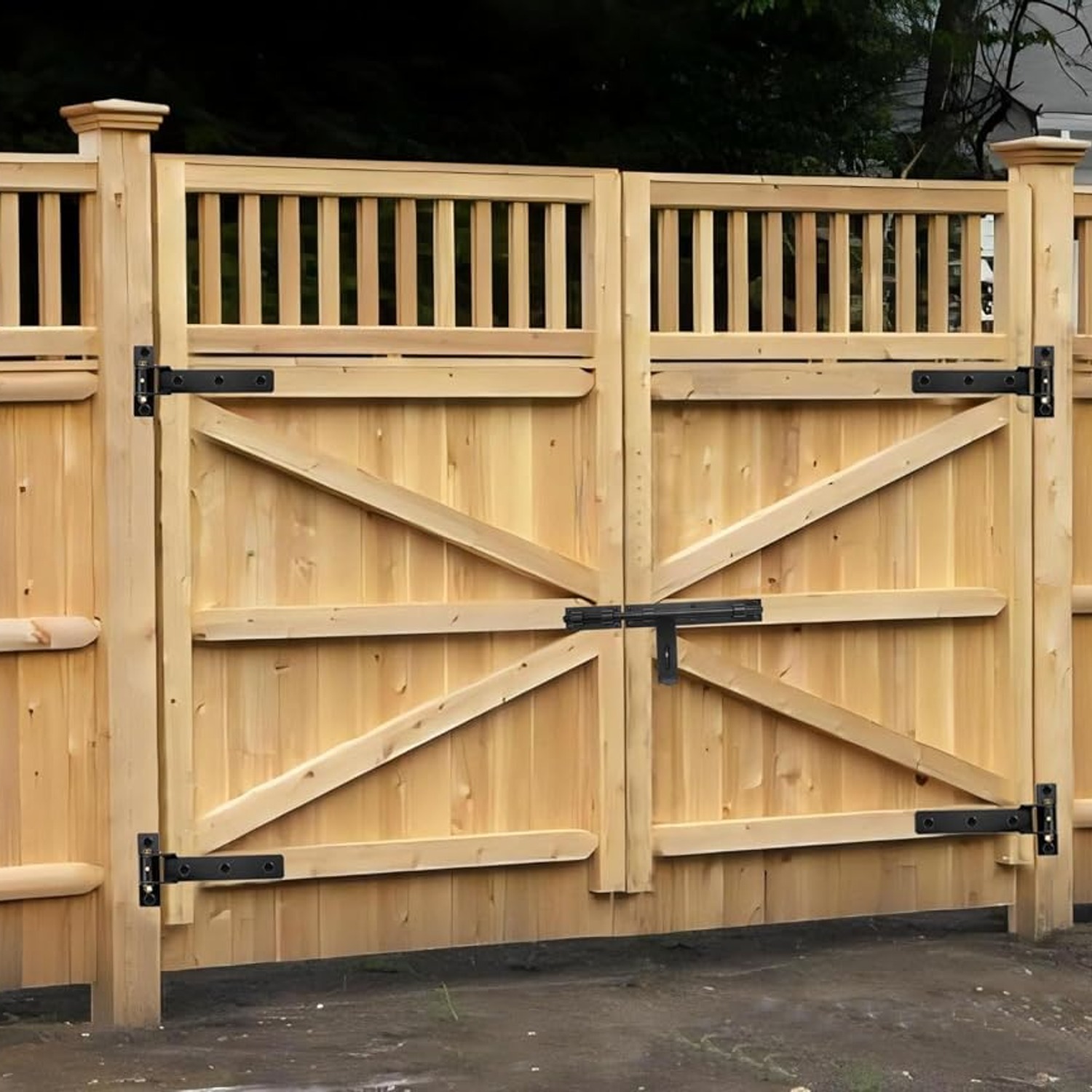
The listing names wooden and metal gates, farm gates, livestock pens and barn doors among its applications. Garden gates and other swinging doors are also described.
For farm gate hinges, focus on the strength of both the gate frame and the post. A hinge may be substantial while the part it attaches to is thin or damaged. Every connection needs to suit the job.
For barn door hinges, check that the door is intended to swing. This hardware is not a sliding track system. Also allow for the door edges, surrounding cladding and any handles.
A smaller garden gate may not need a hinge this size. Compare the mounting footprint with the available timber before choosing. The best gate hardware is the hardware that fits the structure and use, not simply the largest option.
Carbon steel and outdoor care
The product specifications list carbon steel with a black powder-coated finish. This gives you a clear starting point when comparing it with existing black gate hinges or other fence fittings.
The maker does not supply a corrosion test rating. Do not assume that the coating makes the hinges rust-proof or suitable for every exposed site without care. Coastal conditions, damaged coating and trapped debris deserve particular attention when assessing outdoor hardware.
Keep the hinge area reasonably clean and inspect the finish for damage. If steel becomes exposed, seek advice on a suitable repair method. Avoid treating an unknown coating with harsh cleaners.
Check fasteners and movement as part of the same routine. Follow manufacturer instructions for bearing care, since a specific lubricant and service interval are not given here.
Make a practical check before ordering
Start with the gate weight and measurements. Then compare the listed 32.5 x 15 cm size with the mounting area and inspect the post. If any key measurement is missing, resolve it before buying.
The listing gives a unit count of two and describes the contents as two sets of hinges. Confirm the exact parts if your project relies on a particular pack layout. Remember to plan for separate bolts if choosing bolt-on installation.
Check delivery estimates and return conditions on our returns page as well. Do this before booking an installer or taking down a gate you use every day.
Finally, plan how the gate will be supported during the work. Heavy gates need safe handling equipment and suitable help. Keep people clear of the work area, and do not rely on a partly fitted hinge to hold an unsupported gate.
The short version
These HFCENXIE hinges combine a nominal 13 inch size, carbon steel construction and built-in ball bearings. The listing offers bolt-on or weld-on fitting, with different opening angles for face and side mounting.
Choose them by checking the whole installation, not capacity alone. Confirm the load basis, hole layout and any adjustment feature you need. With those questions settled, you can make a sound decision about whether they suit your gate.